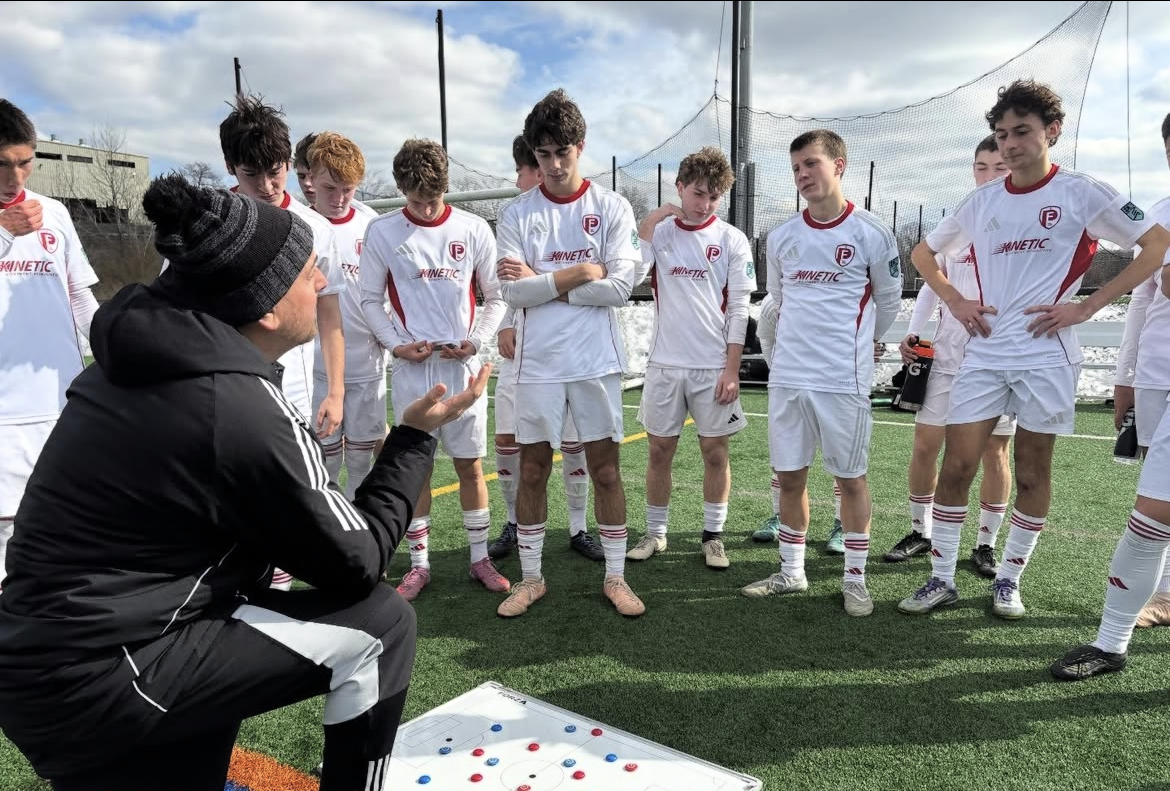
Jamie Scott didn’t plan on becoming a soccer coach in America. He grew up in the UK, where the game was simply a way of life, and started his coaching career while at university. Ironically, his first taste of coaching came at AFC Bournemouth. He eventually traveled to the United States for what was supposed to be a short stint. Two decades later, he’s still here, and still coaching with the same conviction that brought him to the game in the first place.
Today, Jamie serves as Academy and ECNL Director for the Penn Fusion Soccer Academy's boys program, one of the most established youth soccer organizations on the East Coast. The club serves roughly 3,000 athletes, from three-year-olds in recreational programs all the way through college-age players. The club has placed 750 alumni in college soccer programs ranging from Harvard to Clemson to Princeton and produced 34 professional players. One of those alumni is Matt Freese, the USMNT goalkeeper and NYCFC starter in Major League Soccer.
Jamie coaches the U17 and U18 ECNL teams directly. He also oversees technology adoption across the program. And his philosophy for all of it is the same: whatever it is you are doing, do it right.
The Professional Experience Philosophy
Penn Fusion is not a professional club. At its core, it’s a community organization with a mission greater than simply results on the pitch. But Jamie doesn’t think that means its players should experience anything less than a professional standard of care and preparation.
"My role is about more than soccer," he says. "The habits these players build here, how they prepare, how they respond to difficulty, how they show up every day, those are habits they will carry for the rest of their lives. The lines of the soccer field are just the classroom."
That philosophy extends to everything the program invests in. The facilities. The coaching staff. The technology. And when PlayerData came into the picture, it fit naturally into a program that was already asking the question: what else can we do for these players?
Jamie sometimes has his players wear their PlayerData GPS vests over their jerseys at tournaments. Not as a statement. As a signal, to other teams, to college coaches, to anyone watching, that Penn Fusion takes its players seriously.
A Club Without a Sports Scientist
Penn Fusion operates at an elite level. But like most club programs, it doesn’t have a dedicated sports scientist on staff. The coaches are doing multiple jobs simultaneously, training players, managing teams, handling administrative duties, building relationships with college programs. Time is the scarcest resource in the building.
That is why ease of use was non-negotiable for Jamie when evaluating technology. He needed something that delivered real, actionable data without requiring a specialist to extract it.
"PlayerData gives me data that is actually useful," he says. "It is not complicated. It fits into how we already work rather than adding to what we have to do."
Just as importantly, the platform puts data directly in the hands of the players themselves. Through the PlayerData athlete app, players can access their own metrics immediately after every session, top speed, distance covered, accelerations, decelerations, workload. They don’t have to wait for a coach to pull a report. They can see it for themselves.
"The players love it," Jamie says. "There’s a competitive element to it. They want to see their numbers. They all want to record the fastest speed. That competitive spirit is exactly what you want to cultivate in a program like ours."
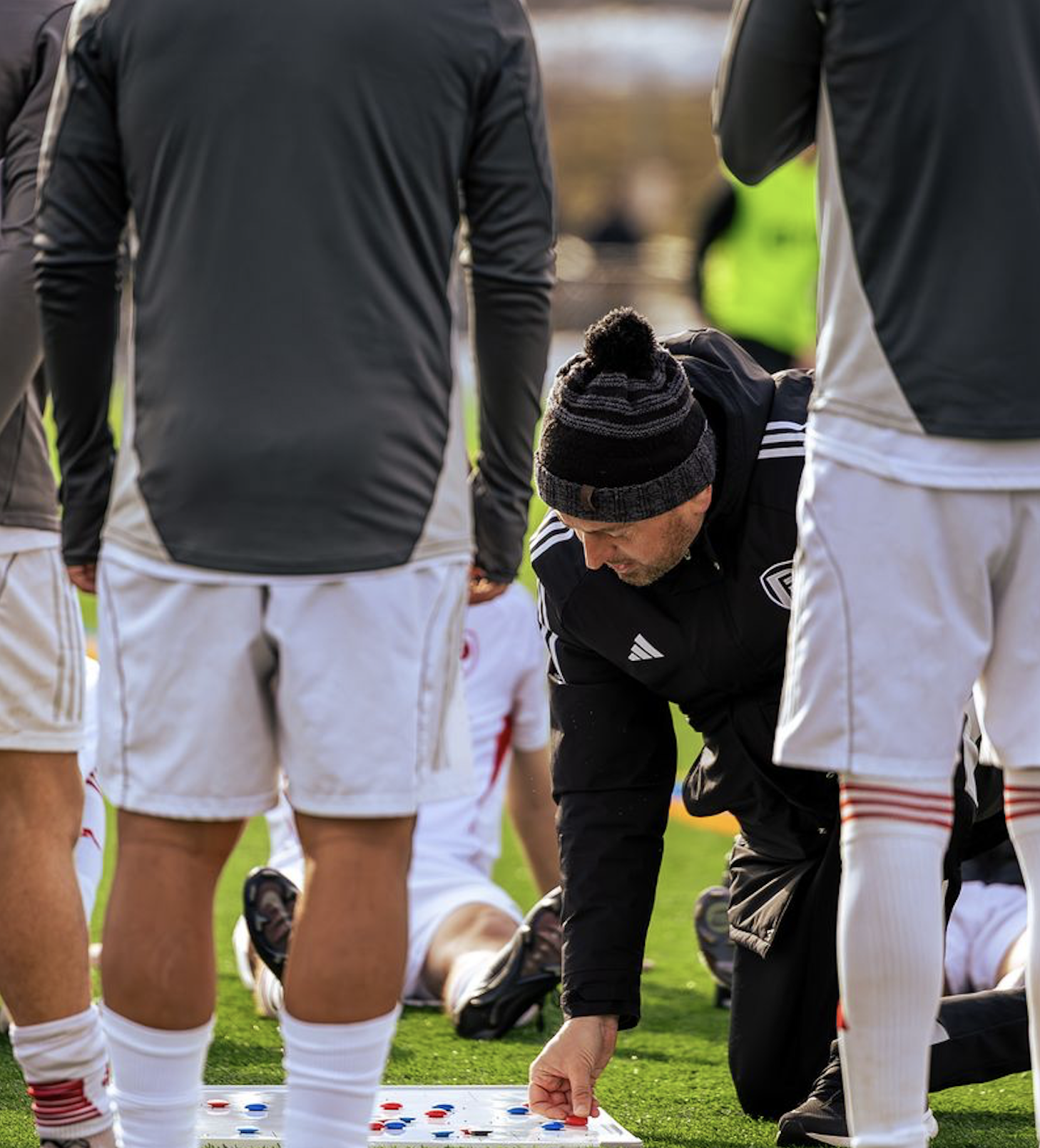
When the Data Changes a Recruiting Conversation
The most powerful moment in Jamie's experience with PlayerData has not been about training. It’s been about recruiting.
College coaches are increasingly data-informed in how they evaluate recruits. They know what their programs demand physically. They know what an incoming player needs to look like in terms of speed, distance output, and workload to succeed at their level. And when a high school player shows up without any objective data to speak to those questions, there’s a chance the eye test can fail them.
Penn Fusion recently had a player who was being passed over. When Jamie tried to get an answer as to why, one coach specifically cited the player’s physical profile wasn’t cut out for the next level.
Reality is, eyes alone can be deceiving.
Jamie was able to respond by sharing that player’s GPS data with the coach. The metrics told a different story than the impression left by a single match.
"That player ended up getting recruited," he says. "The data made the conversation possible in a way that film alone could not."
It’s a story that captures something fundamental about what GPS data does for a youth player: it arms them with objectivity in a conversation that often occurs without them.
The Player Who Just Said Okay
When asked about a player who shaped how he coaches, Jamie told a story that has nothing to do with talent and everything to do with character.
He had a player who was moved from the U17 first team to the U19 second team. A difficult conversation for any coach to have. The kind of moment where a player's response tells you everything about who they are.
The player's response was two words: okay, coach.
Six months later, he was on the U19 first team, and then went on to become an NCAA Division I player.
"That player taught me as much as I have ever taught any player," Jamie says. "The ones who make it are the ones who respond to difficulty the right way. I learned the value in being honest and direct. It’s the only way. We’re not just developing soccer players, but people who know how to handle adversity."
What's Next
Penn Fusion is expanding its use of PlayerData to additional teams next season. The appetite within the program is there. The coaches see the value. And the parents, increasingly sophisticated in their understanding of what elite development looks like, have responded positively to the experience.
Soccer, as Jamie describes it, is beautifully chaotic. One team can take twenty shots and lose to a team that takes one. The margins are impossibly thin. A detail-oriented program, one that pays attention to load, development, and the data behind both, doesn’t guarantee outcomes. But it closes the gap.
"We want every player who comes through this program to have a professional experience," Jamie says. "That means doing things right. It means taking their development seriously even when nobody is watching."
At Penn Fusion, somebody is always watching. They have the data to prove it.
Interested in learning more about how PlayerData could help your program? Submit your information in the form below.