Return to play has always been a physical conversation. Distance covered. High speed running. Accelerations, decelerations. The metrics that tell a performance team whether a player's body is ready to handle the demands of training and competition again.
Lots of practitioners have long known that that conversation is incomplete.
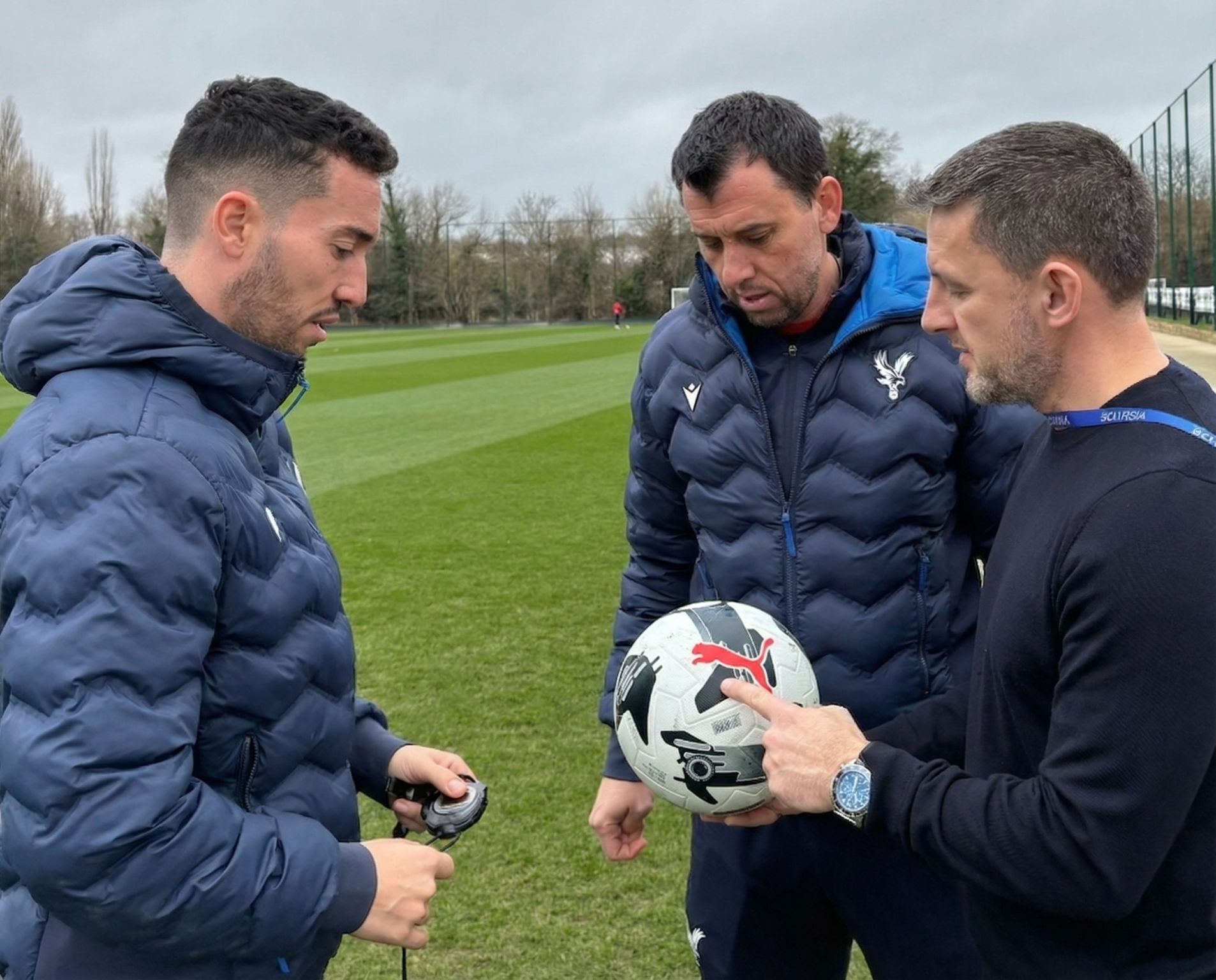
As Head of Academy Player Development at Crystal Palace FC, Joel Carter's role encompasses high potentials through all phases of the overall academy in addition to the transition from under-21 to the first team. He aims to help these athletes navigate the pathway as quickly and safely as possible. Over the past year, he's been using PlayerData's Connected Ball to add a layer to the return to play process that has previously never been available.
"Before PlayerData’s ball technology, we didn't have the ability to merge the technical and tactical elements in addition to the physical elements," Carter says. "To get a further understanding of the game and ultimately bring a lot of our departments together."
The Case That Started It
An under-21 goalkeeper sustained a recurrence of a quad injury (Rec Femoris), returning to the same problem in almost identical circumstances a year apart. The first injury healed. The second was more severe. Carter and the performance team were determined not to let it happen a third time.
To understand what caused the recurrence, they looked back at the context. The goalkeeper had been starting more games over a twelve-month period, and thus had a significant increase in match minutes. This meant he was carrying a significantly greater physical, technical, and psychological load as a result.
In the week he sustained the second injury, he played three games. In one of those games, the players were subjected to near gale-force winds in South London. He proceeded to complete somewhere between fourteen and fifteen maximal ball strikes into the wind.
"We didn't have a way of categorically calculating the actual effect that has on the player's system," Carter says.
The Connected Ball fills that gap.
Building Back to Worst Case
The return to play protocol Carter design used the conditions of that game as the benchmark. If the goalkeeper had been exposed to fifteen maximal ball strikes in the match that caused the injury, the rehab programme needed to build him back to that point safely before he returned to full training. Carter's team wanted to ensure they could measure that the player was receiving weekly exposures to maximal ball striking, just like they do with maximum speed exposures.
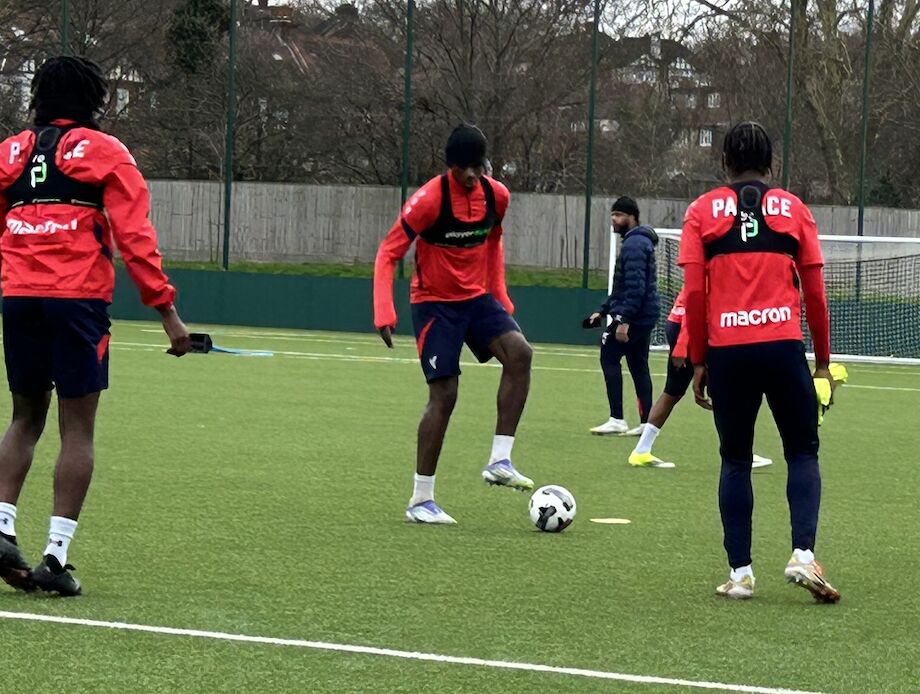
Using the Connected Ball, the performance team tracked every kick in every session. Ball velocity. Direction of travel. Energy transferred. The distribution of kicks across speed zones. How the session progressed from lower intensity work to maximal effort.
"We were able to provide lots of feedback for not only the goalkeeper but the goalkeeper coach in relation to the techniques the player was executing and potentially making some changes to safely execute skills under more stressful situations," Carter says.
The data showed something the eye alone would have missed. The goalkeeper had a tendency to make the ball drift from right to left from time to time, something visible in the direction of travel radar that the Connected Ball generated after each session. That became a key focus of the rehabilitation process, addressing a technical pattern that may have contributed to the injury in the first place.

What the Technology Unlocks
For Carter, the real value of the Connected Ball sits in what it does to the conversation inside the building.
"Before the ball, there hasn’t been a piece of equipment I've found personally that enables us to get the medical team in the room and talk about some of the individuals that potentially have some injury history in these particular areas," he says.
The data brings coaches, medical staff, performance scientists, and analysis departments into the same conversation with the same objective information.
"It's bringing a lot of stakeholders together," Carter says. "And that's the biggest positive."
The Connected Ball also transforms how players engage with their own rehab. Rather than receiving abstract load numbers they struggle to connect to their performance, they can see the speed of each strike, and how their technical output is developing week on week.
"It's maximising player engagement," Carter says. "This enables us to go beyond the general physical outputs and start to express some of the technical and tactical demands."
Where This Goes Next
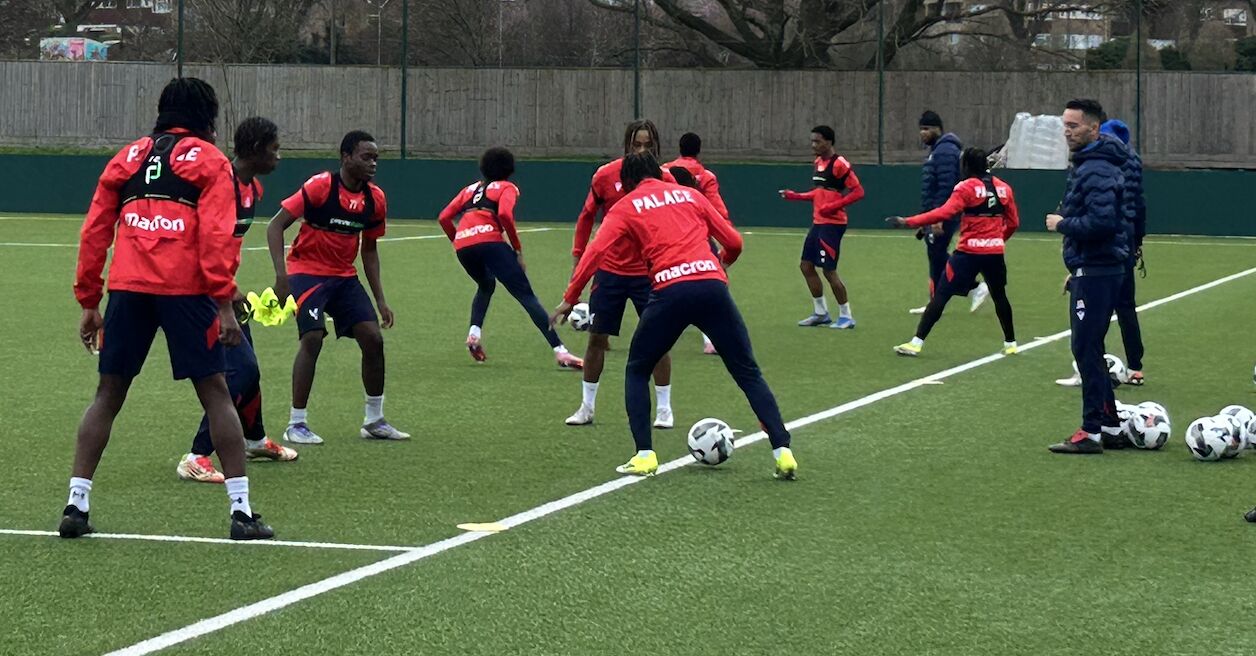
Crystal Palace has already extended the use of the Connected Ball beyond individual return to play cases into full team training sessions, tracking the ball striking load across multiple positions simultaneously. Defenders, midfielders, wingers, and strikers all generate different ball striking profiles in the same session. Now the academy can see all of it.
For Carter, that's where the potential of the technology really opens up. Not just managing the players who are coming back from injury, but understanding the technical and tactical demands placed on every player in every session, building a picture of what the game actually asks of each position, and designing training that prepares players for those demands to maximise the development of the player whilst mitigating injury risk.
"We need to be ahead of the curve," he says. "And using a technology like this is pivotal for that."
Joel Carter: Return To Play Presentation
Joel delivered a keynote presentation at Sportsmith's Return to Play Conference in Paris, FR this spring. To see a recording of his presentation, complete the form below.